Applications, specifications and model comparison
Official catalogue country of origin: TWN.
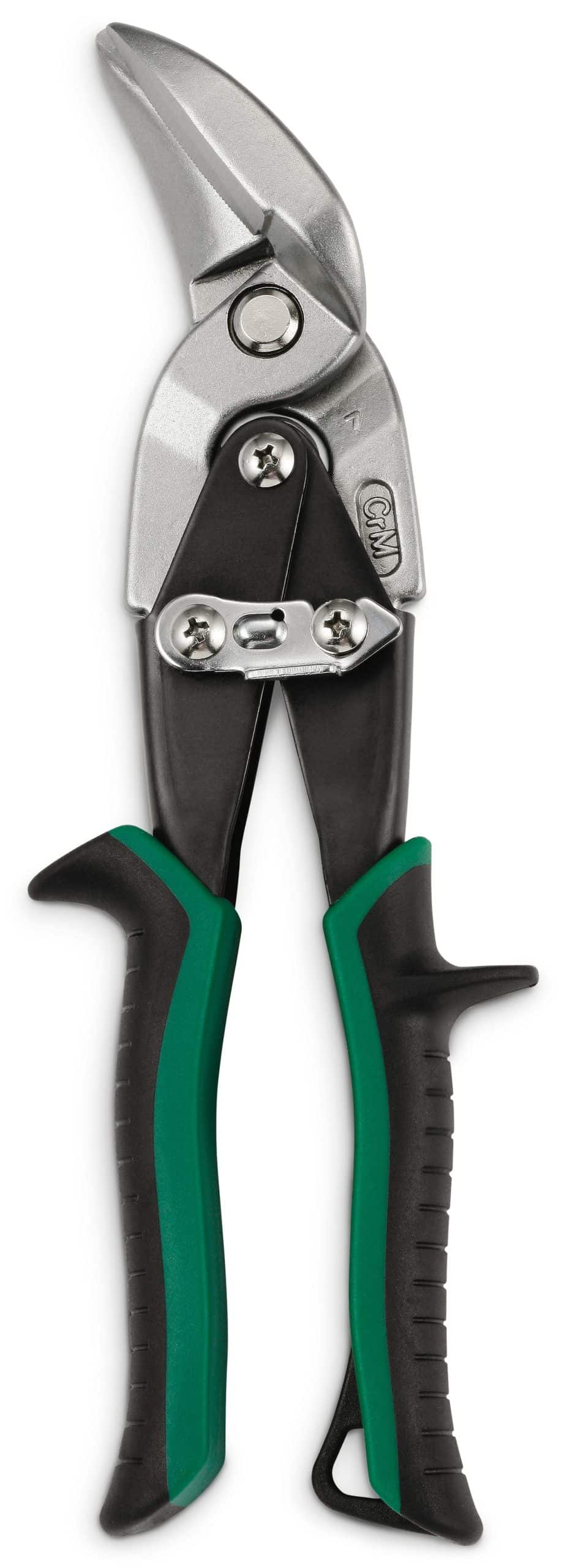
AVSNP01160 — Offset Aviation Tin Snips, Right Cut (Blue-Point®). Grip or cut only the materials and components covered by the tool’s design.
Applications and industries
Vehicle repair, fabrication and maintenance workshops are potential users, depending on the specific jaw and cutting function.
- Match jaw or cutting-head shape to the task.
- Then check capacity, reach and handle clearance before selecting a model.
These industry examples are selection guidance, not additional manufacturer approvals.
Features of AVSNP01160
- Serrated edges help create stable bite and prevent slippage
- Chrome-Molybdenum alloy steel forged blades provide greater strength and durability
- Solid and comfortable handle grips with non-slip design
- High tensional strength spring designed for longer life
- Center fastener provides high-tensile strength and longer life of tool
- Quick and easy spring-free automatic latch design, allows one hand release for better safety and convenience
- Meets ANSI® and DIN standards
Specifications and fit checks
Gripping pliers, cutters and snips perform different jobs. Compare the stated function and capacity rather than overall length alone.
Similar models to AVSNP01160
The table compares the listed model details. These are selection options, not confirmed replacements. Check the differences against your task and existing equipment.
Model comparison using official catalogue data
| Compare |
AVSNP01160 |
AVSNP01020 |
AVSNP01010 |
| Official model description |
AVSNP01160 — Offset Aviation Tin Snips, Right Cut (Blue-Point®) |
AVSNP01020 — Aviation Tin Snips, Right Cut (Blue-Point®) |
AVSNP01010 — Aviation Tin Snips, Left Cut (Blue-Point®) |
Choosing AVSNP01160 for the task
Select the contact shape for the work rather than choosing only by overall length. Pliers, snips, clamps and vises may grip, cut or hold, but those functions are not interchangeable. Compare the actual jaw or blade geometry, the published capacity and the space needed to operate the handles. A nominal opening can be useful information without describing the complete working range.
For a set, check the individual tool types and sizes against the planned tasks. A larger assortment is valuable only when its contents are relevant. Also, distinguish a general gripping tool from a purpose-specific service tool. Do not infer an electrical, non-sparking or other protective rating from the handle colour or material. Before use, follow the manufacturer’s limitations and the relevant work procedure. For a replacement tool, describe the existing model and the access or function that needs to change.
Planning the workshop application
Define the intended job in practical terms before comparing options. Record the equipment or component involved, the operation to perform and the access available around it. Include the current tool or accessory if this purchase replaces an existing item. That context helps distinguish a size change from a different product function. It also makes the application and industry examples above easier to assess against the actual work.
Understanding the catalogue record
The official listing identifies this model as Offset Aviation Tin Snips, Right Cut (Blue-Point®). Its catalogue grouping is Snips / Aviation Snips. Use that description to identify the product format, then read the individual specifications for the details that matter to the job. A category describes where the product sits in the range; it is not an additional compatibility approval.
The current record does not provide a complete dimensional specification table for this item. The model description and any listed features remain useful references, but they do not justify filling in missing dimensions, capacities or approvals. If fit depends on a measurement or a particular parent tool, identify that requirement in the inquiry and obtain confirmation before choosing the item.
The catalogue country-of-origin field is TWN. This field concerns the listed product origin; it does not identify local inventory, delivery time or the warranty terms of a Vietnam quotation. Confirm those commercial details separately.
Comparing options before ordering
The comparison above names AVSNP01020 and AVSNP01010. Review the displayed differences against the requirement for this job. Begin with function and compatibility, then compare access, configuration and included components. If the names differ by size, drive, colour or kit format, identify which difference matters before making a choice. Similar models are not automatic replacements, and a larger or more expensive option is not necessarily the better match.
Purchase questions and receiving checks
What should the order include?
Ask for a line-item description of the supplied configuration. For a set or kit, confirm the contents; for a component, confirm the quantity and the matching parent model where relevant. If photographs show a larger assembly or several items, do not assume all of them form part of this SKU. Keep any essential accessories and documents explicit in the quotation so that receiving checks can follow the same requirements.
Receiving, care and record keeping
On receipt, compare the item and its packaging with the ordered model, quantity and configuration. Check the supplied components and any requested documentation. Keep the product identification visible in the workshop’s inventory record. If the delivered item differs from the confirmed order, resolve that difference before assigning it to the planned job. This is especially useful when a range contains visually similar sizes or accessories for different parent tools.
For continued use, follow the manufacturer’s instructions for inspection, cleaning, storage and maintenance. Do not assume that a cleaning chemical, lubricant or maintenance method used on another tool is suitable here. Keep damaged or uncertain equipment out of the planned task until its condition is assessed. Record any replacement parts by model so future orders use the confirmed reference rather than a visual guess.
Ordering in Vietnam
Send Techmaster Vietnam the model number AVSNP01160 and details of your task or existing equipment. Include any required sizes, connections and accessories. This helps identify the correct configuration.
Before ordering, confirm the quotation, lead time, package contents and applicable warranty terms. The official catalogue is the technical reference; it does not establish local stock or a Vietnam selling price.
For the source record, see the official Snap-on product listing. You can also browse the Vietnam product catalogue for related tools.