Applications, specifications and model comparison
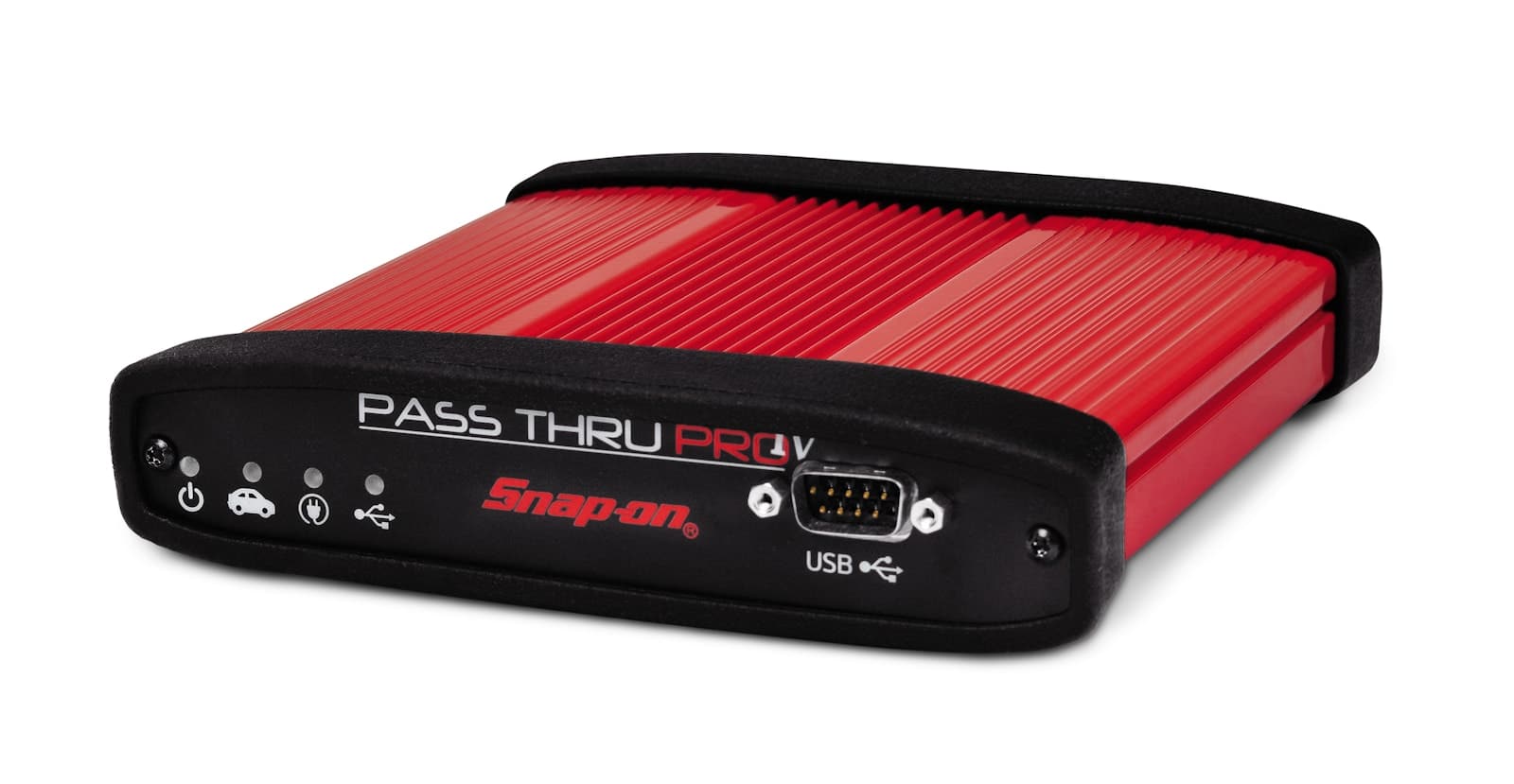
EETA113D — Pass Thru Pro IV Reprogramming Device. Support the stated inspection, diagnostic or measurement workflow.
Applications and industries
Automotive diagnostics, equipment troubleshooting and industrial maintenance are potential settings within the product’s stated application.
- Identify the equipment, measured condition and required range or interface.
- Then compare the accessory, instrument or consumable with the complete diagnostic procedure.
These industry examples are selection guidance, not additional manufacturer approvals.
Features of EETA113D
- Certified SAE® J2534 pass-through device updates software/firmware in vehicle electronic control unit (ECU) with software directly from the OEMs
- Fix software-controlled drivability, emission issues and program new ECUs
- Program emission-related ECUs on any J2534-compliant vehicle (2004–newer) and other J2534 compliant controllers (at OEM dependent)
- Includes protocols for fault tolerant CAN, new CAN lines and access to additional late-model vehicle networks
- Includes programming interface, 6′ USB PC-interface cable, 6′ vehicle interface cable and instruction manual
- Additional requirements include a reflashing software application, data subscription from OEM and a PC with internet access
- Easier than ever—go to www.snapon.com/diagnostics/us/Pass-Thru-Pro-IV for Pass Thru Pro IV firmware/driver updates
- The Pass Thru Pro IV vehicle interface connects to a PC (not included) through the USB connector and to the vehicle through the OBD-II connector; ECU reflashing software and update files are downloaded from the OEM website through the pass-through device into vehicle control unit
- NOTE: A stable vehicle power supply is critical to protect the vehicle ECU during programming—the Blue-Point® EEBC-FLASH is well suited to this purpose
Specifications and fit checks
- KWP2000: ISO9141/14230
- Ground Pin: 9
- Single Wire: CAN Support
- 4 CAN Channels: (FD CAN, Dual Wire)
- Programming Voltage: On J1962 pin 6, 9, 11, 12, 13, 14 or Aux
- Compliant To: SAE J2534 (Feb 2002), SAE J2534-1 (Dec 2004), ISO 22900-1 MVCI physical layer
An accessory or consumable is not a complete diagnostic system. Verify range, calibration needs, parent-equipment compatibility and the official procedure.
Similar-model selection for EETA113D
A sufficiently close alternative has not been verified for this SKU. Therefore, compare the exact function, dimensions and mating equipment before choosing another model. Ask Techmaster Vietnam for a model-specific comparison.
EETA113D selection checklist
For EETA113D, verify the required task, working range, interface dimensions and package contents against the official catalogue details. This final check helps prevent ordering a visually similar model with a different fit or capability.
Choosing EETA113D for the task
Identify the parent tool, machine or assembly before selecting a service component. A spring, screw, spacer, shaft, adaptor or other small part may have a simple name but a very specific role. The connection, dimensions and equipment revision can all matter. Start with the service documentation and the model number, then compare the official part reference. Do not use a general visual resemblance as the only basis for substitution.
For a missing or worn component, record where it belongs and which other parts it contacts. Photographs and measurements can support the inquiry, but they do not replace the maker’s fit information. If the source record is limited, keep the unresolved dimensions or compatibility questions open until they are confirmed. An accessory is not a complete service system unless the catalogue describes it that way. Likewise, a component from a related set is not automatically interchangeable. Keep the confirmed replacement reference with the equipment’s maintenance record.
Planning the workshop application
Define the intended job in practical terms before comparing options. Record the equipment or component involved, the operation to perform and the access available around it. Include the current tool or accessory if this purchase replaces an existing item. That context helps distinguish a size change from a different product function. It also makes the application and industry examples above easier to assess against the actual work.
Understanding the catalogue record
The official listing identifies this model as Pass Thru Pro IV Reprogramming Device. Its catalogue grouping is Hand Held Diagnostic Accessories / J2534 Compliant Programming Interface. Use that description to identify the product format, then read the individual specifications for the details that matter to the job. A category describes where the product sits in the range; it is not an additional compatibility approval.
Further catalogue details
- CAN Bus: Capable of ISO 15765, GMLAN, J1939, and ISO14229
- GM® Class2: J1850VPW
- Ford® SCP: J1850PWM
- Chrysler® SCI: J2610
For this record, the available specification labels include KWP2000; Ground Pin; Single Wire. Read each value together with its label and unit. A drive size, external dimension and working range describe different things, even if their numbers look similar. If the job requires a value that is not listed, request that detail before ordering instead of estimating it from the photograph.
The catalogue country-of-origin field is USA. This field concerns the listed product origin; it does not identify local inventory, delivery time or the warranty terms of a Vietnam quotation. Confirm those commercial details separately.
Comparing options before ordering
No sufficiently close alternative is confirmed in the comparison section. That is an unresolved selection question, not proof that every other model is unsuitable. For a useful comparison, provide the required function, dimensions and parent equipment. A supplier can then check a specific candidate against those requirements. Do not substitute a related accessory, a kit component or a product with a similar name without resolving the relevant fit details.
Purchase questions and receiving checks
What should the order include?
Ask for a line-item description of the supplied configuration. For a set or kit, confirm the contents; for a component, confirm the quantity and the matching parent model where relevant. If photographs show a larger assembly or several items, do not assume all of them form part of this SKU. Keep any essential accessories and documents explicit in the quotation so that receiving checks can follow the same requirements.
Receiving, care and record keeping
On receipt, compare the item and its packaging with the ordered model, quantity and configuration. Check the supplied components and any requested documentation. Keep the product identification visible in the workshop’s inventory record. If the delivered item differs from the confirmed order, resolve that difference before assigning it to the planned job. This is especially useful when a range contains visually similar sizes or accessories for different parent tools.
For continued use, follow the manufacturer’s instructions for inspection, cleaning, storage and maintenance. Do not assume that a cleaning chemical, lubricant or maintenance method used on another tool is suitable here. Keep damaged or uncertain equipment out of the planned task until its condition is assessed. Record any replacement parts by model so future orders use the confirmed reference rather than a visual guess.
Ordering in Vietnam
Send Techmaster Vietnam the model number EETA113D and details of the task or existing equipment. Include any required sizes, connections and accessories.
Before ordering, confirm the quotation, lead time, package contents and applicable warranty terms. The official catalogue is the technical reference; it does not establish local stock or a Vietnam selling price.
For the source record, see the official Snap-on product listing. You can also browse the Vietnam product catalogue for related tools.