Applications, specifications and model comparison
Official catalogue country of origin: USA.
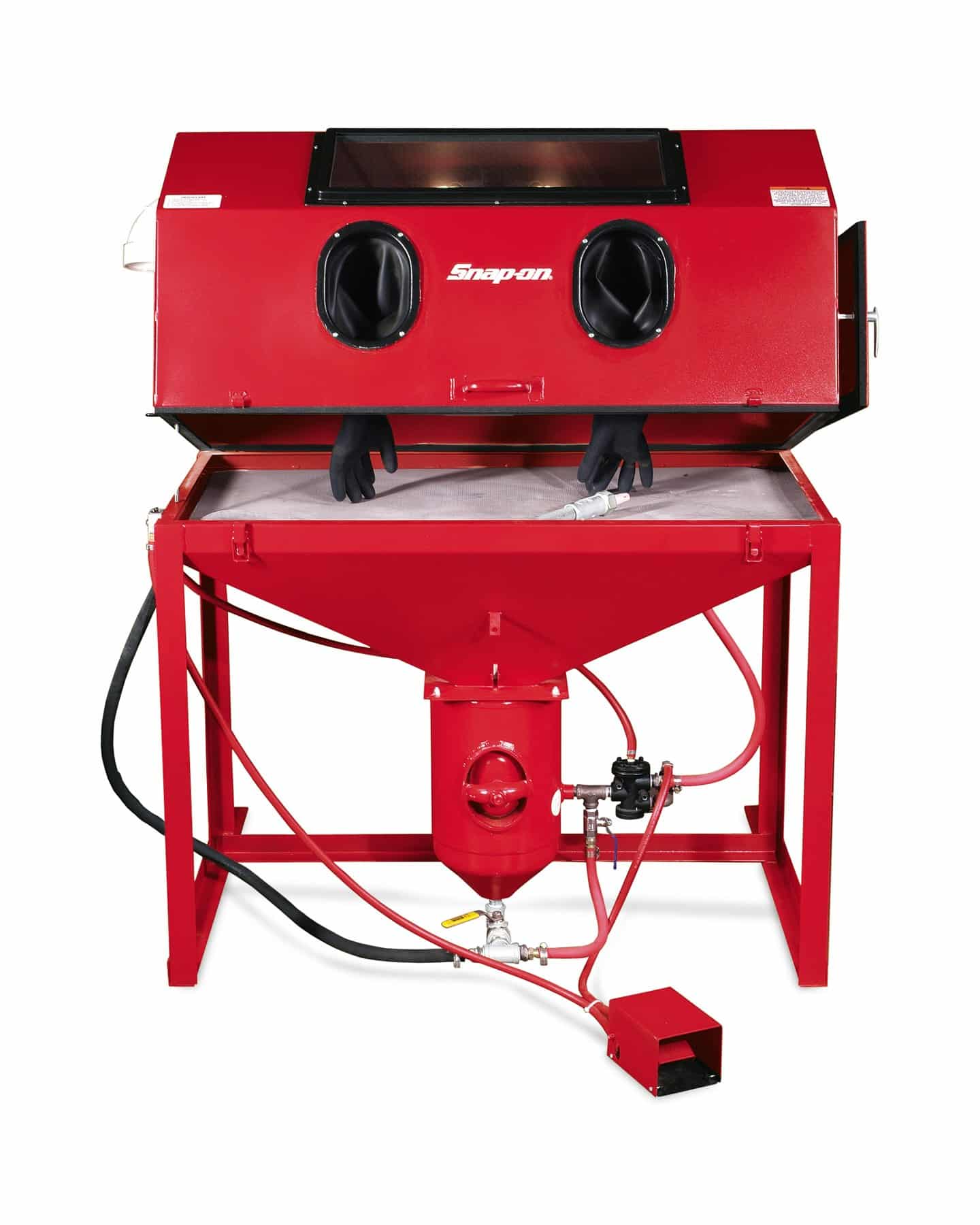
YA4826PA — Pressure Feed Abrasive Blast Cabinet. Support a compatible surface preparation or finishing process.
Applications and industries
The manufacturer lists these application details:
- Automotive and truck repair, manufacturing, restoration shops, tool and die shops, marine repair, engine rebuilders, fabrication shops and electric motor rebuilders
Fabrication, body repair and maintenance workshops are potential settings when the process matches the workpiece.
- Match the accessory or media to the tool or blast system.
- Next, confirm material suitability and the required finish before working on the component.
These industry examples are selection guidance, not additional manufacturer approvals.
Features of YA4826PA
- Effectively cleans metal parts right down to the bare substrate
- Pressurized media system cleans up to four times faster than siphon systems
- Heavy-duty blast cabinet with an industrial grade blast nozzle and foot pedal control is designed for continuous use and reduced operator fatigue
- Features a clamshell lid to assist in loading heavy parts and side door for loading smaller parts
- Features 24" long cotton lined blasting gloves to protect the operator during use
- Variable output blast gun with trigger-style control
- High efficiency 160 CFM dust collection system provides user excellent visibility during blasting with a lower noise output
- Dust collection system also separates dust from usable media, minimizing waste
- Auto refilling system eliminates the need to refill hopper with media
- Heavy-duty steel grating in work area for heavier parts
- Dual fluorescent lights in work area for increased visibility
- Includes 25 lb of glass bead abrasive
Specifications and fit checks
- Air Supply Required: 100 PSI @ 45 CFM
- Electrical Requirements: 120 V AC, 60 Hz
- Overall Dimensions, inches: 52 W x 25 D x 60 H
- Dust Collection Size in CFM: 160
- Side Door Dimensions, inches: 19 W x 13 H
- Inside Dimensions, inches: 48 W x 24 D x 14–23 H
Compare size, grade, attachment and permitted operating conditions. Different grades or media can produce different finishes; verify the full process specification.
Similar models to YA4826PA
The table compares the listed model details. These are selection options, not confirmed replacements. Check the differences against your task and existing equipment.
Model comparison using official catalogue data
| Compare |
YA4826PA |
YA3825 |
YA3825PJJ |
| Official model description |
YA4826PA — Pressure Feed Abrasive Blast Cabinet |
YA3825 — Abrasive Blast Cabinet (Red) |
YA3825PJJ — Abrasive Blast Cabinet (Green) |
| Air Supply Required |
100 PSI @ 45 CFM |
100 PSI @ 18 CFM |
100 PSI @ 18 CFM |
| Overall Dimensions, inches |
52 W x 25 D x 60 H |
38 W x 26 D x 70 H |
38 W x 26 D x 70 H |
| Dust Collection Size in CFM |
160 |
205 |
205 |
| Side Door Dimensions, inches |
19 W x 13 H |
17-1/2 W x 12 H |
17-1/2 W x 12 H |
Choosing YA4826PA for the task
Select the cutting or finishing geometry for the material and the surface that needs attention. A drill bit, saw blade, burr, file or abrasive has its own engagement pattern. Length, diameter, tooth form, cut grade and shank or attachment can each affect selection. Begin with the process and the required result, then compare the published tool details. A familiar overall shape does not establish the same cutting behaviour.
Next, check the host tool and the working space. A long cutter needs suitable access and support, while a different shank or blade fitting may require a different holder. Confirm the permitted operating conditions in the complete product instructions. For an assortment, identify the individual shapes or sizes needed before comparing set counts. A replacement consumable should match both the machine interface and the material requirement. Keep process settings separate from the catalogue description unless the manufacturer explicitly specifies them for the intended task.
Planning the workshop application
Define the intended job in practical terms before comparing options. Record the equipment or component involved, the operation to perform and the access available around it. Include the current tool or accessory if this purchase replaces an existing item. That context helps distinguish a size change from a different product function. It also makes the application and industry examples above easier to assess against the actual work.
Understanding the catalogue record
The official listing identifies this model as Pressure Feed Abrasive Blast Cabinet. Its catalogue grouping is Cabinet Type Abrasive Blast Systems / Cabinet-Type Abrasive Blast Systems. Use that description to identify the product format, then read the individual specifications for the details that matter to the job. A category describes where the product sits in the range; it is not an additional compatibility approval.
Further catalogue details
- Top Opening Dimensions, inches: 48 W x 24 H
For this record, the available specification labels include Air Supply Required; Electrical Requirements; Overall Dimensions, inches. Read each value together with its label and unit. A drive size, external dimension and working range describe different things, even if their numbers look similar. If the job requires a value that is not listed, request that detail before ordering instead of estimating it from the photograph.
The catalogue country-of-origin field is USA. This field concerns the listed product origin; it does not identify local inventory, delivery time or the warranty terms of a Vietnam quotation. Confirm those commercial details separately.
Comparing options before ordering
The comparison above names YA3825 and YA3825PJJ. Review the displayed differences against the requirement for this job. Begin with function and compatibility, then compare access, configuration and included components. If the names differ by size, drive, colour or kit format, identify which difference matters before making a choice. Similar models are not automatic replacements, and a larger or more expensive option is not necessarily the better match.
Purchase questions and receiving checks
What should the order include?
Ask for a line-item description of the supplied configuration. For a set or kit, confirm the contents; for a component, confirm the quantity and the matching parent model where relevant. If photographs show a larger assembly or several items, do not assume all of them form part of this SKU. Keep any essential accessories and documents explicit in the quotation so that receiving checks can follow the same requirements.
Receiving, care and record keeping
On receipt, compare the item and its packaging with the ordered model, quantity and configuration. Check the supplied components and any requested documentation. Keep the product identification visible in the workshop’s inventory record. If the delivered item differs from the confirmed order, resolve that difference before assigning it to the planned job. This is especially useful when a range contains visually similar sizes or accessories for different parent tools.
For continued use, follow the manufacturer’s instructions for inspection, cleaning, storage and maintenance. Do not assume that a cleaning chemical, lubricant or maintenance method used on another tool is suitable here. Keep damaged or uncertain equipment out of the planned task until its condition is assessed. Record any replacement parts by model so future orders use the confirmed reference rather than a visual guess.
Ordering in Vietnam
Send Techmaster Vietnam the model number YA4826PA and details of your task or existing equipment. Include any required sizes, connections and accessories. This helps identify the correct configuration.
Before ordering, confirm the quotation, lead time, package contents and applicable warranty terms. The official catalogue is the technical reference; it does not establish local stock or a Vietnam selling price.
For the source record, see the official Snap-on product listing. You can also browse the Vietnam product catalogue for related tools.